2026

IJRR (under review)

ACME: A Multi-Cultural, Multi-Embodiment Social-Navigation Dataset

Marpally et al.

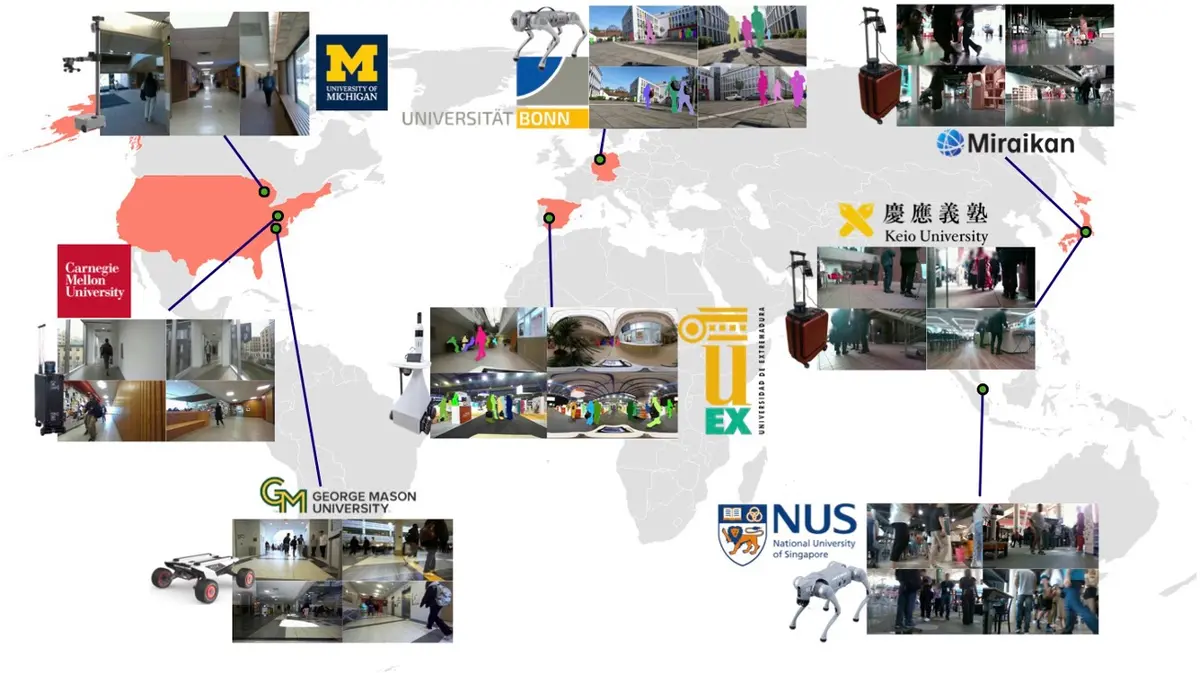
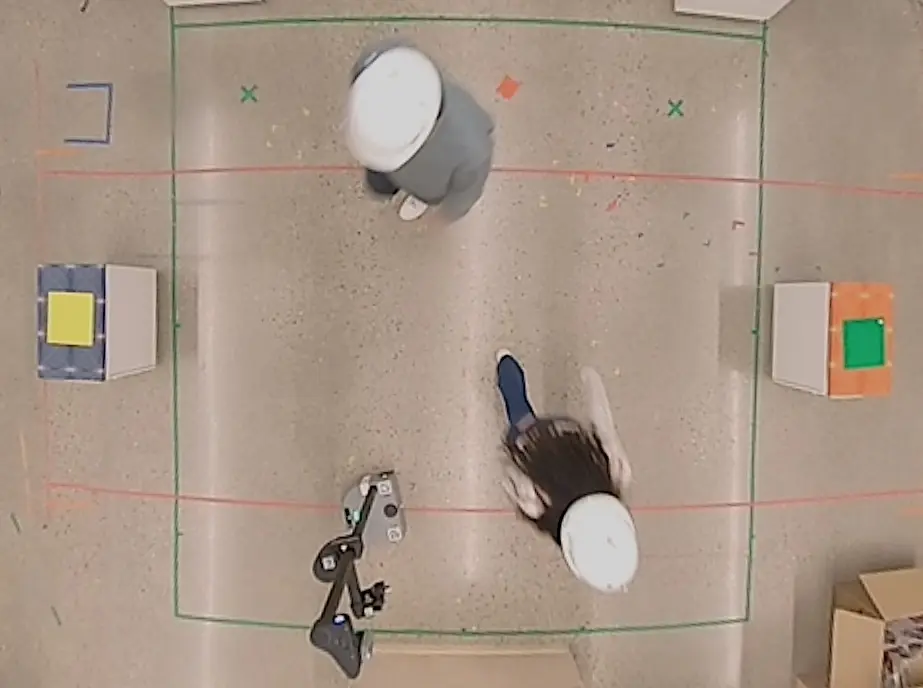
We present a large dataset (29.35 hours of onboard robot data and 43.5 hours of overhead pedestrian tracking data) collected across 8 institutions from geographically and culturally diverse parts of the world aiming at advancing social robot navigation research.

2025

RA-L '25

🏆 Best Paper Award, RSS 2024 Social Navigation Workshop

Characterizing the Complexity of Social Robot Navigation Scenarios

Andrew Stratton, Kris Hauser, and Christoforos Mavrogiannis

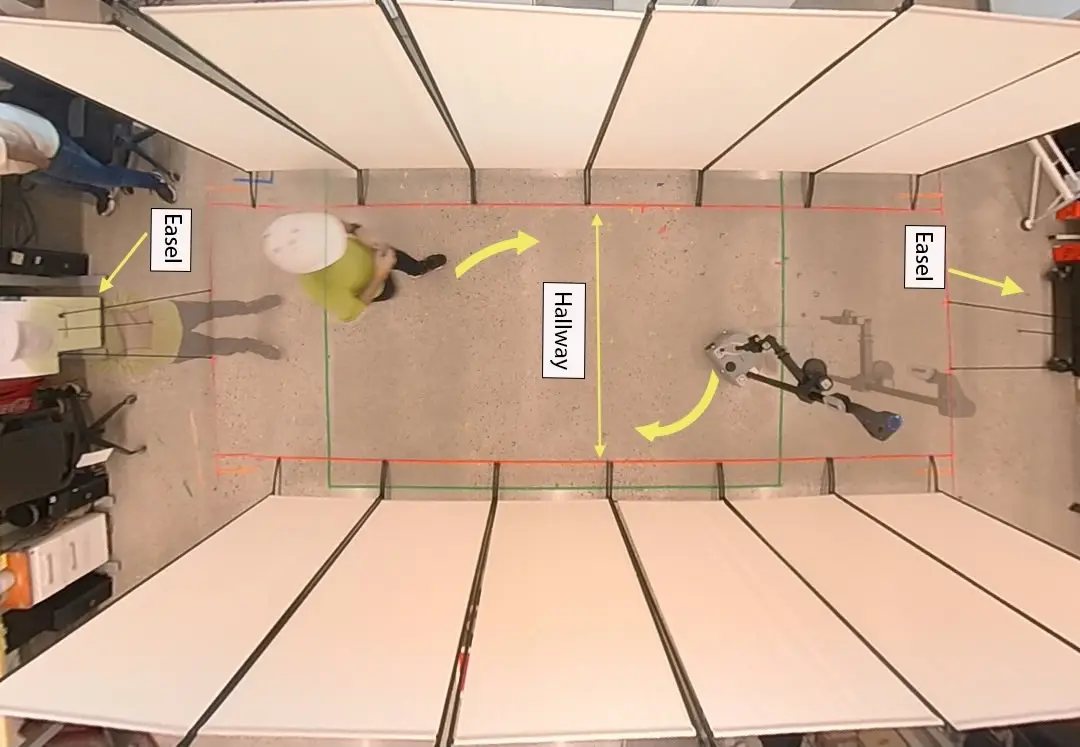
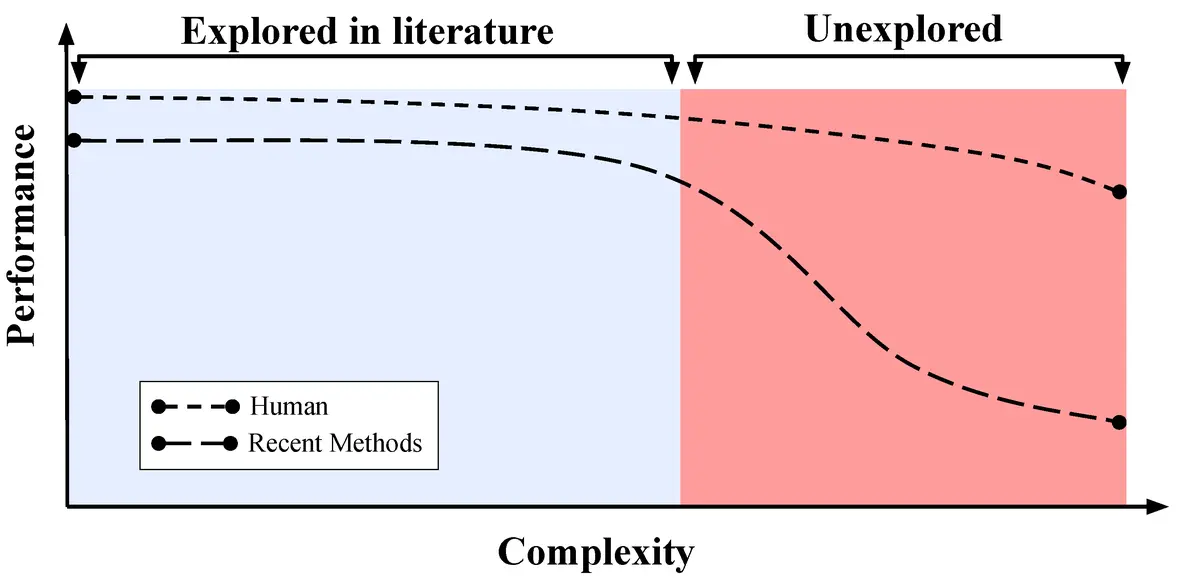
Social navigation algorithms are often demonstrated in overly simplified scenarios. In this work, we explore how contextual factors impact algorithm performance and suggest practical directions for scaling evaluation practices to meet real-world standards.

2024

RSS '24

Demonstrating HOUND: A Low-cost Research Platform for High-speed Off-road Underactuated Nonholonomic Driving

Sidharth Talia, Matt Schmittle, Alexander Lambert, Alexander Spitzer, Christoforos Mavrogiannis, Siddhartha S. Srinivasa

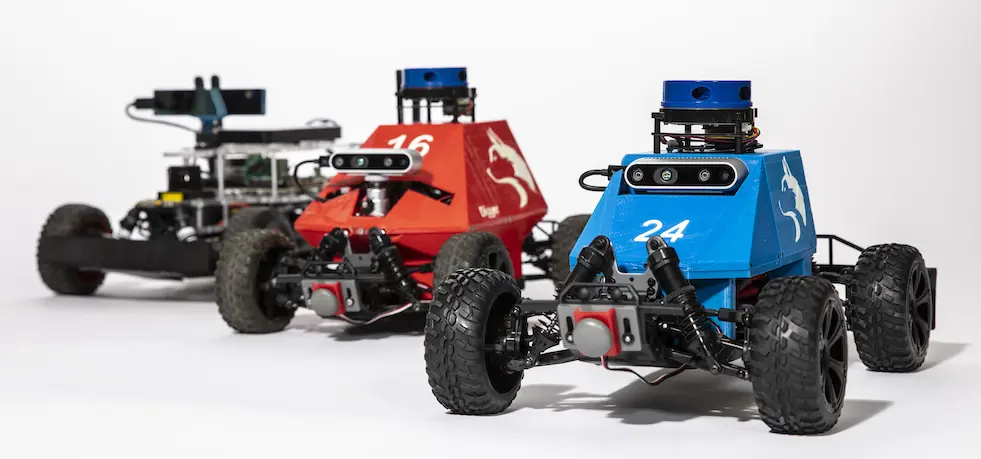
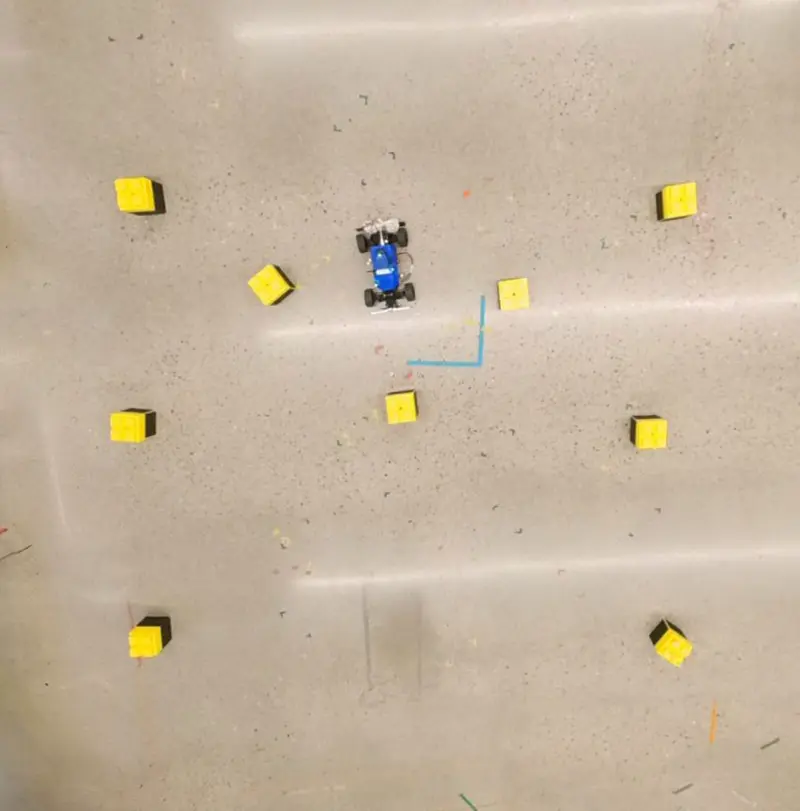
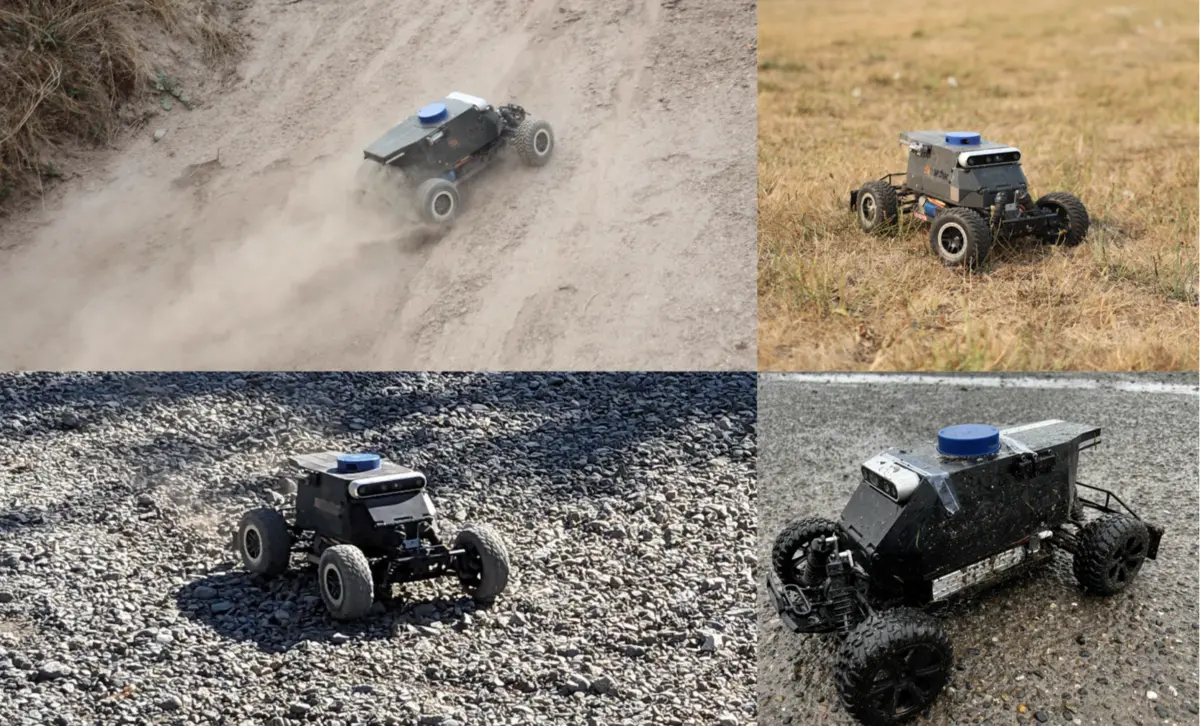
We present HOUND, a small-scale, inexpensive, off-road autonomy platform that handles challenging off-road terrains at high speeds through the integration of a rollover prevention system. HOUND is integrated with a complete stack for perception and control.

2023

IROS '23

PuSHR: A multirobot system for nonprehensile rearrangement

Sidharth Talia, Arnav Thareja, Christoforos Mavrogiannis, Matt Schmittle, Siddhartha Srinivasa

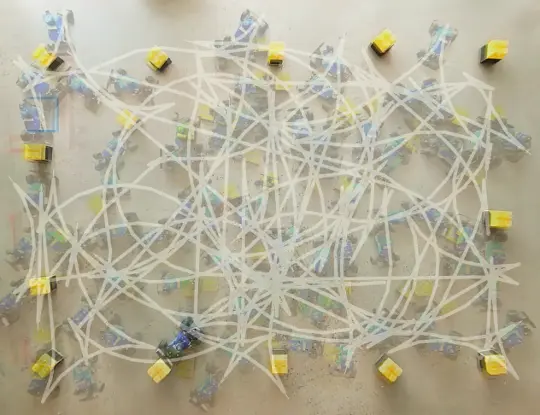
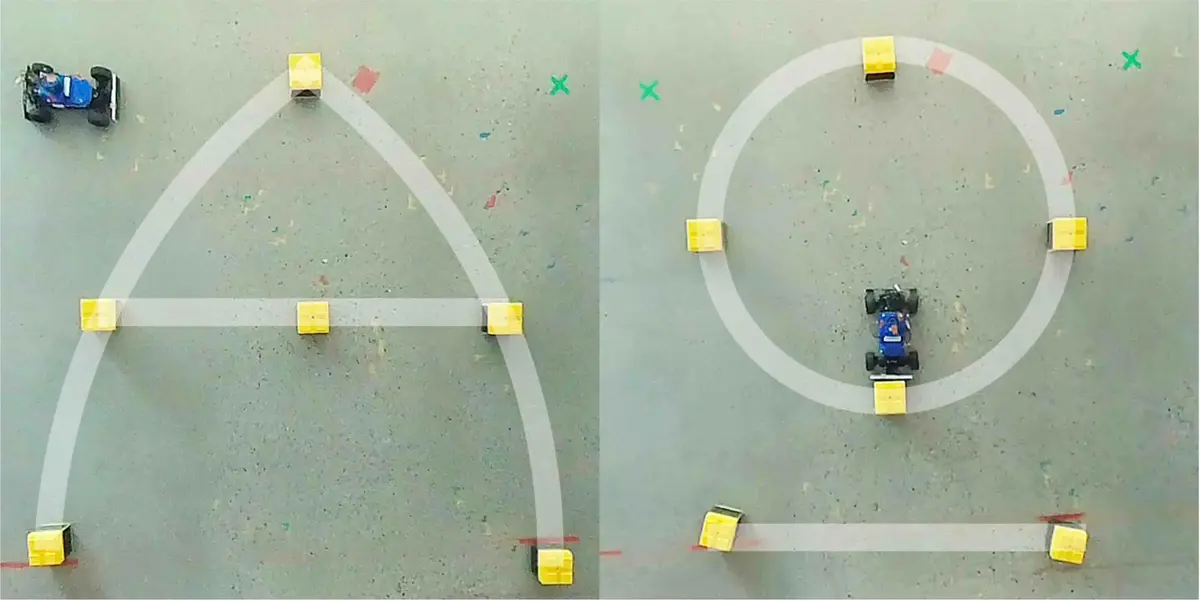
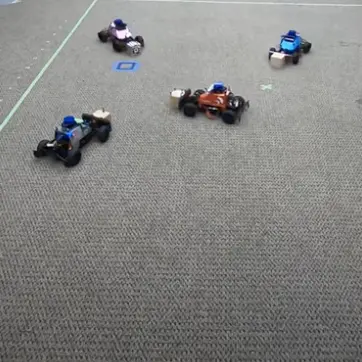
Using MuSHR racecars, we built a multirobot system that combines task assignment, multiagent motion planning, and decentralized control to automatically rearrange a cluttered workspace.

RA-L '23

Winding through: Crowd navigation via topological invariance

Christoforos Mavrogiannis, Krishna Balasubramanian, Sriyash Poddar, Anush Gandra, Siddhartha Srinivasa

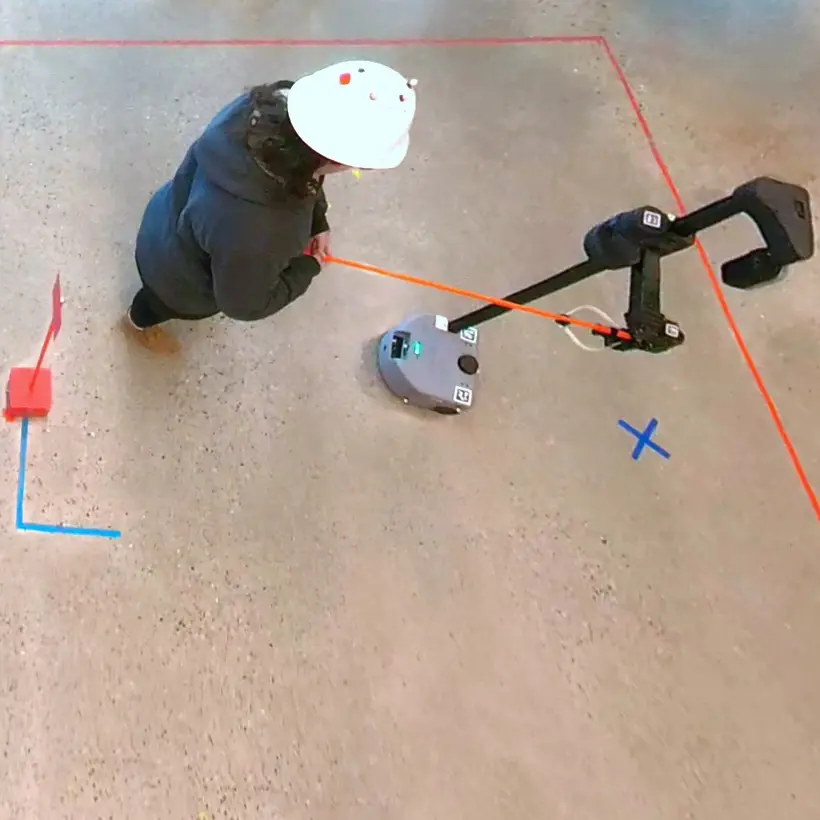
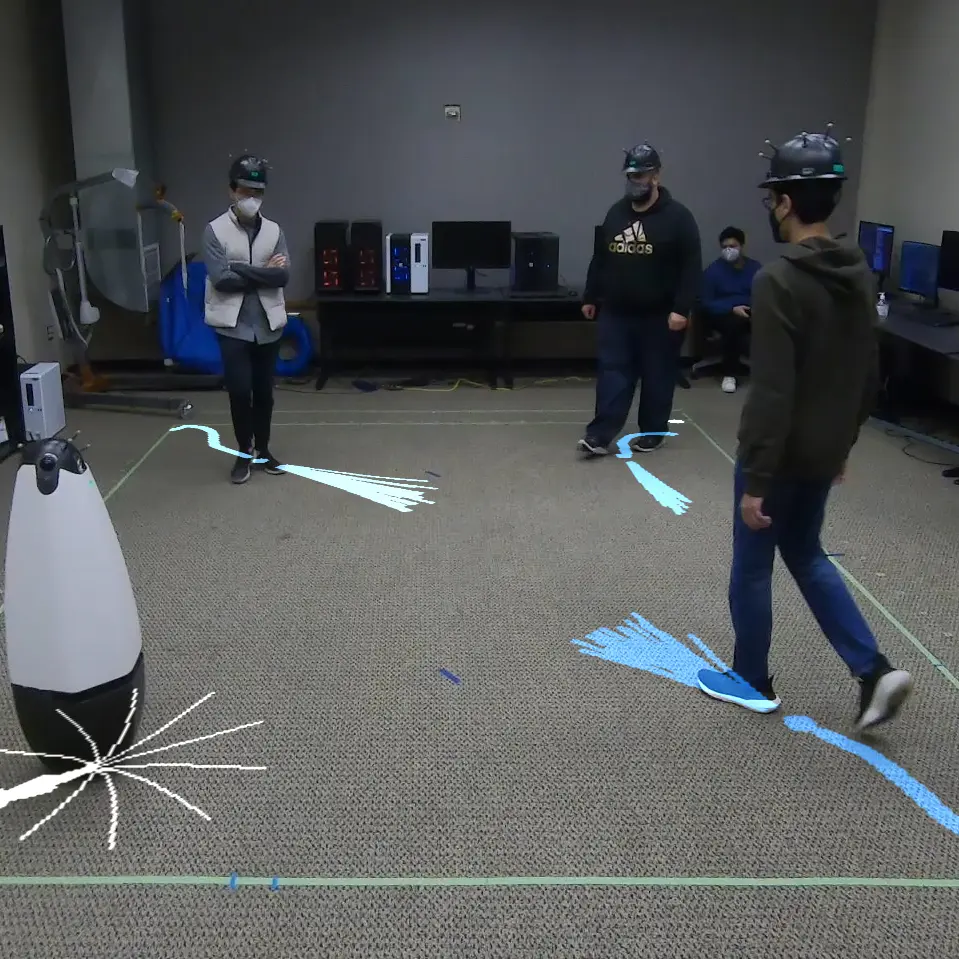
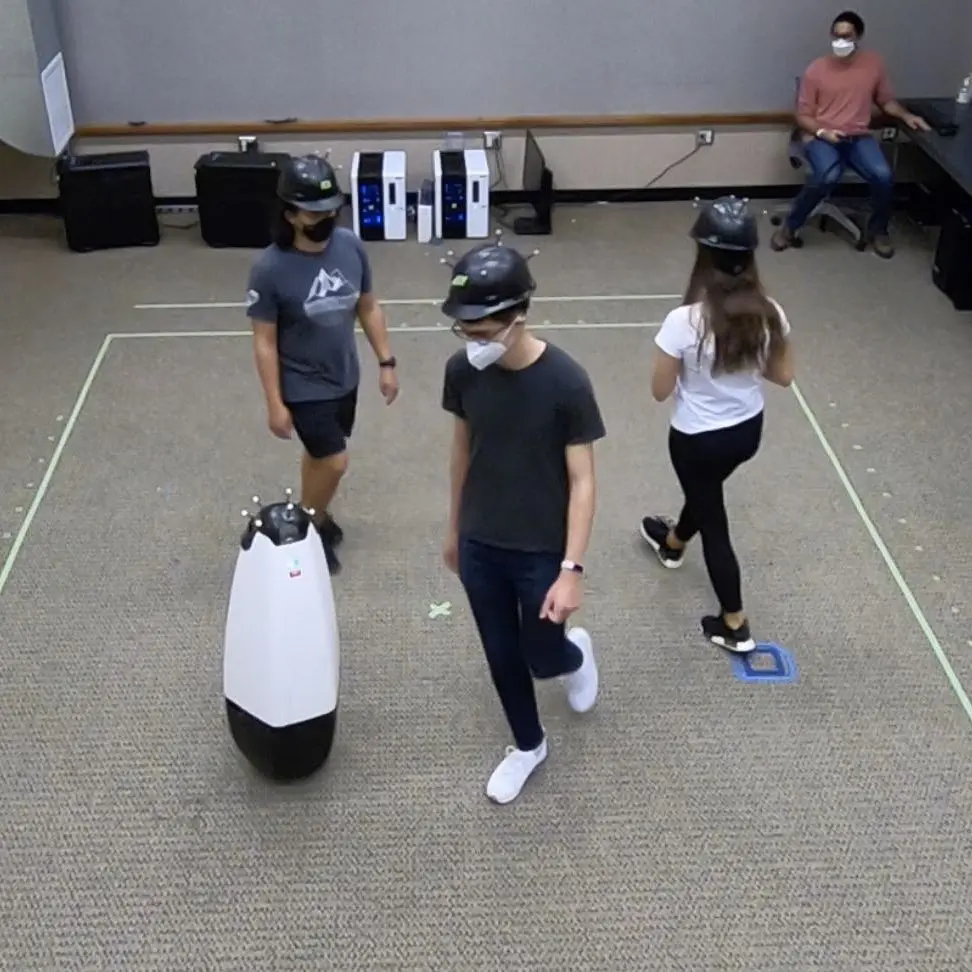
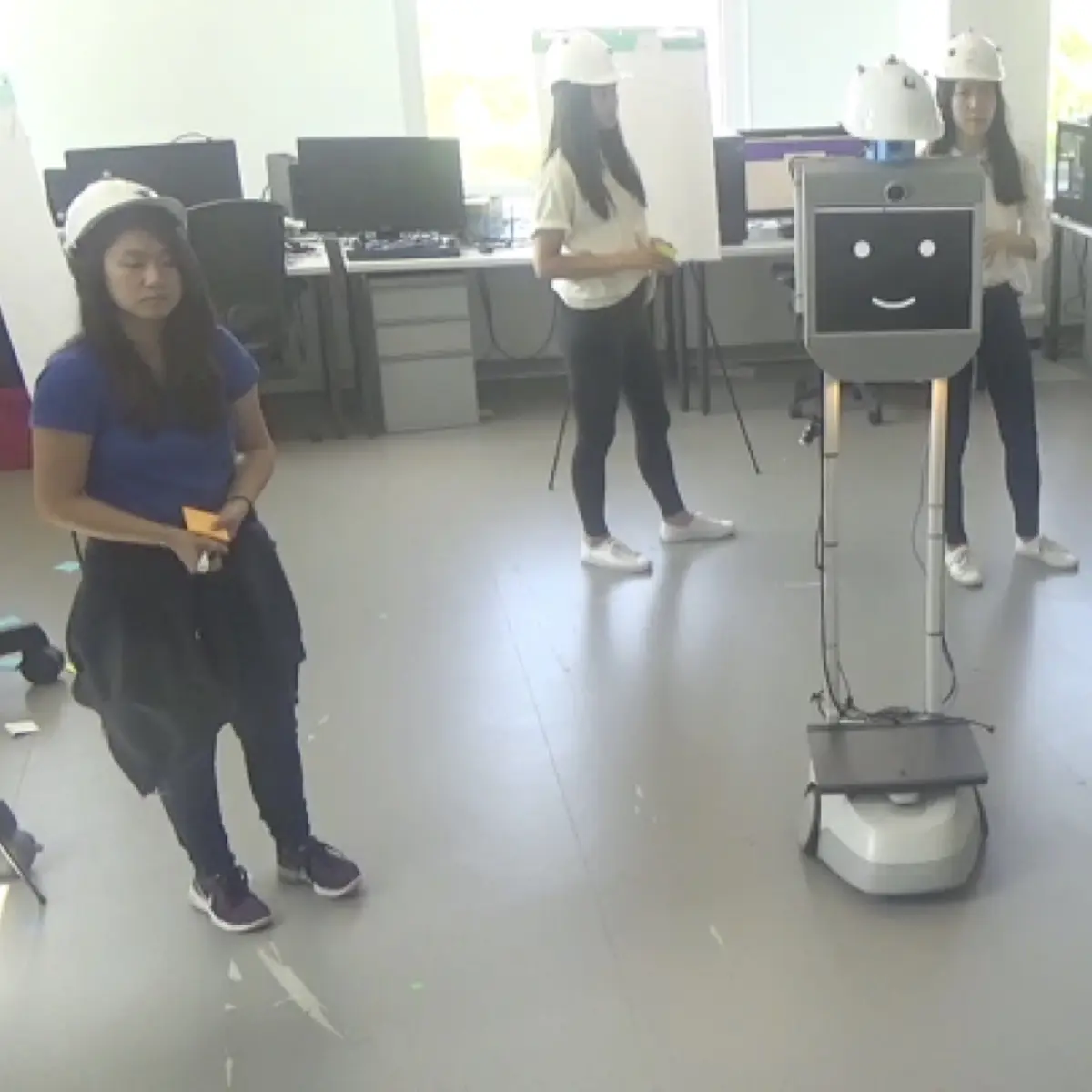
We formalize passing between two agents as a rotation, using a notion of topological invariance, and build a MPC that expedites passing progress in crowded spaces. We demonstrate our approach on a self-balancing robot navigating among 3 users in a lab experiment.

T-HRI '23

Core challenges of social robot navigation: A survey

Christoforos Mavrogiannis, Francesca Baldini, Allan Wang, Dapeng Zhao, Pete Trautman, Aaron Steinfeld, and Jean Oh

We organize challenges in social robot navigation into a set of categories related to broader open problems in robot planning, behavior design, and evaluation methodologies. We review past work, diagnose limitations of adopted practices, and offer constructive feedback and directions for future research.

2022

ICRA '22

Analyzing multiagent interactions in traffic scenes via topological braids

Christoforos Mavrogiannis, Jonathan DeCastro, Siddhartha Srinivasa

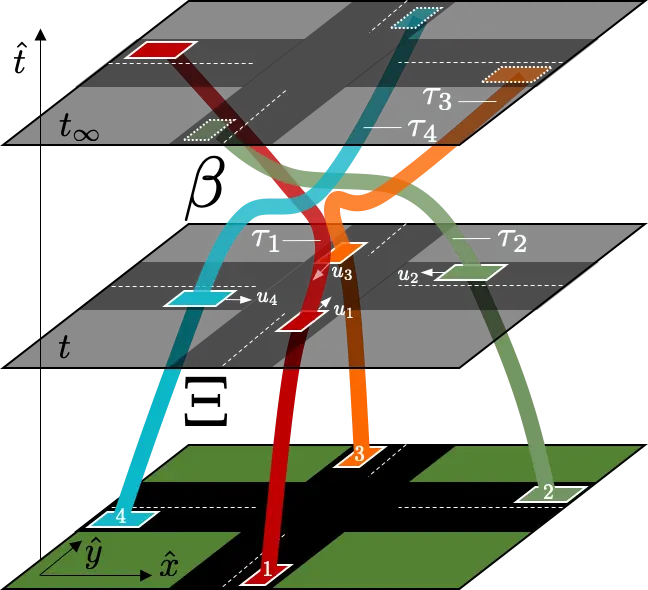
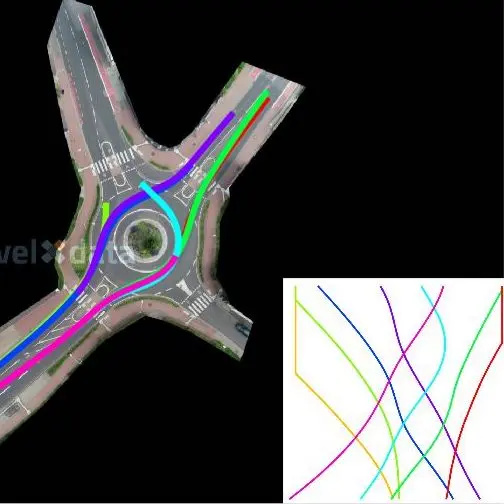
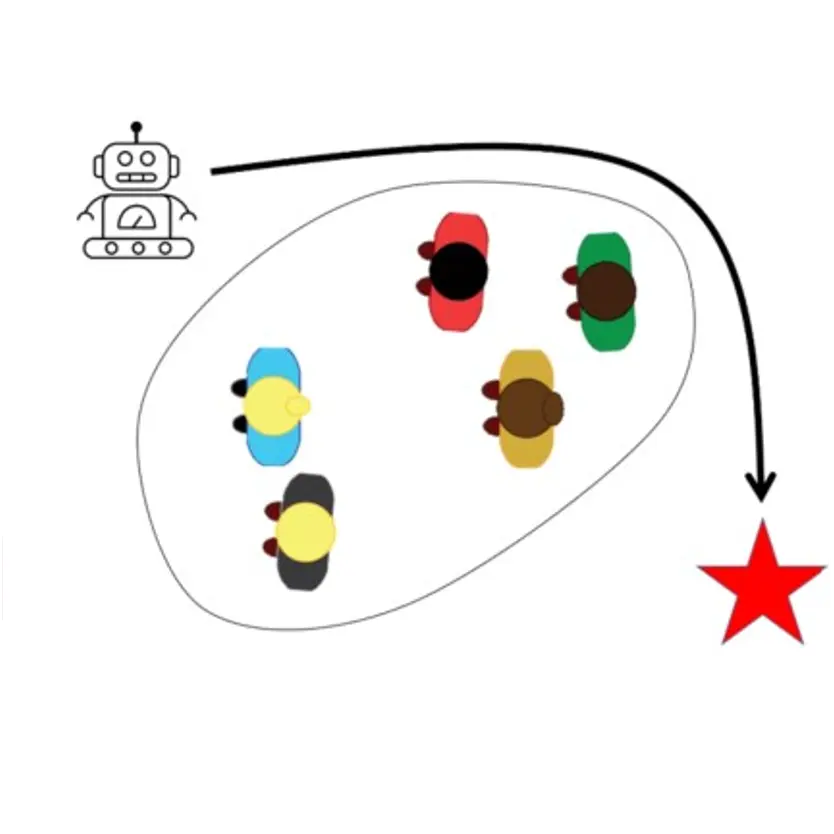
We show that topological braids can be used as a tool to characterize the interactivity of vehicles, which can be useful for evaluating the richness of existing datasets, but also for synthetically designing balanced training datasets and benchmarks.

IROS '22

Optical proximity sensing for pose estimation during in-hand manipulation

Patrick Lancaster, Pratik Gyawali, Christoforos Mavrogiannis, Siddhartha Srinivasa, Joshua Smith

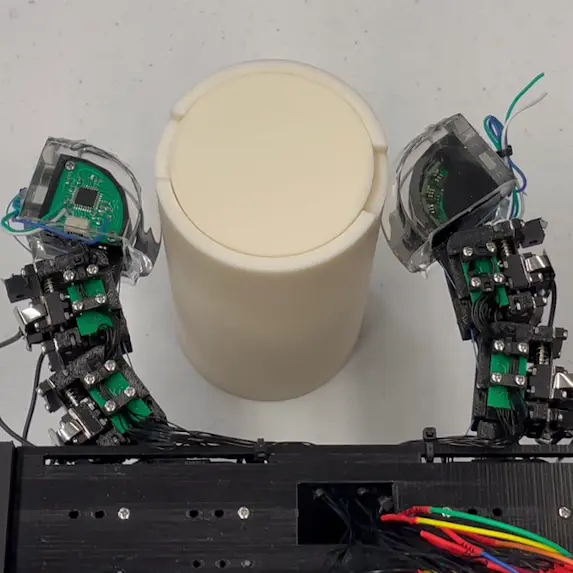
We developed a new gripper with optical proximity sensing on fingertips. We demonstrate that proximity sensing enables significantly more accurate object pose estimation during manipulation compared to tactile sensing.

2021

CoRL '21

Group-based motion prediction for navigation in crowded environments

Allan Wang, Christoforos Mavrogiannis, and Aaron Steinfeld

Inspired by Gestalt theories from psychology, we build a group-based prediction model and integrate it into a MPC, demonstrating higher safety and fewer group intrusions compared to baselines using individual motion prediction across extensive simulations and real-world pedestrian datasets.

RSS '21

Modeling human helpfulness with individual and contextual factors for robot planning

Amal Nanavati, Christoforos Mavrogiannis, Kevin Weatherwax, Leila Takayama, Maya Cakmak, Siddhartha Srinivasa

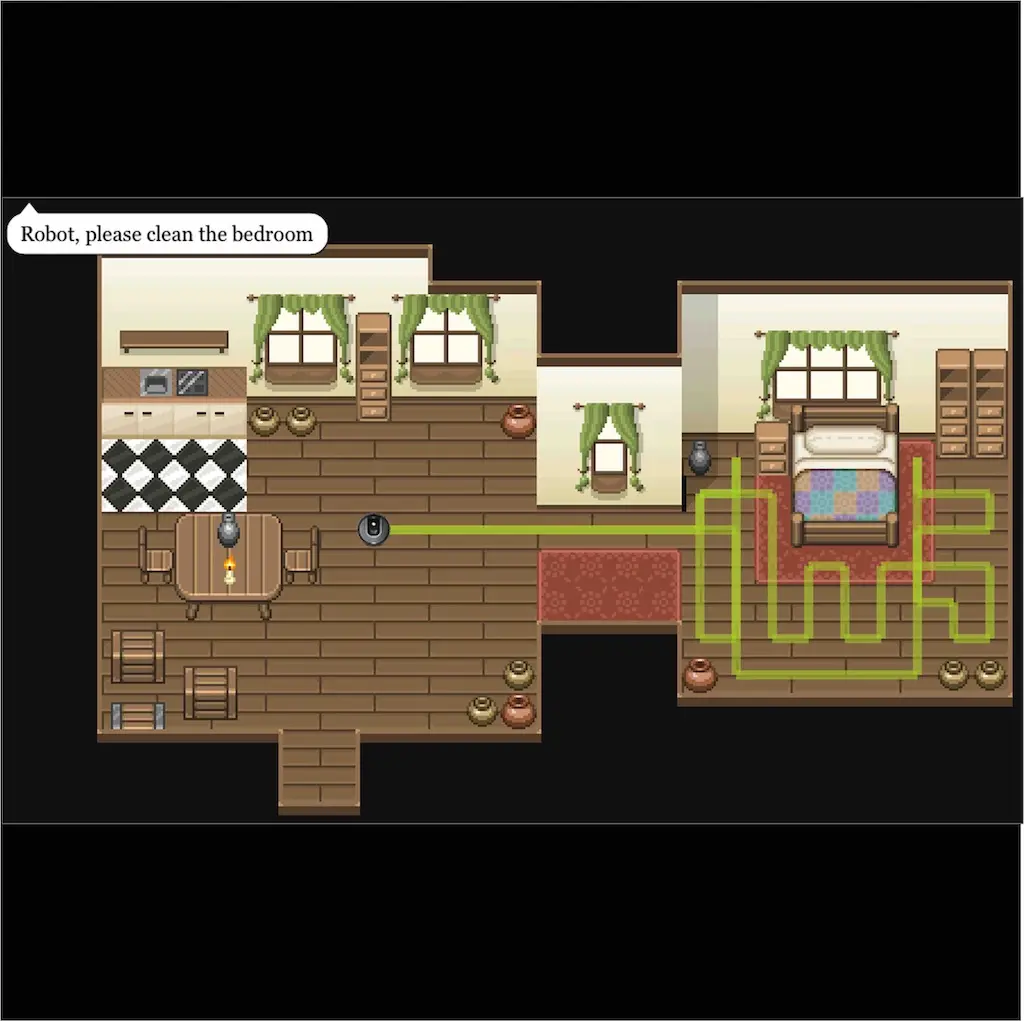
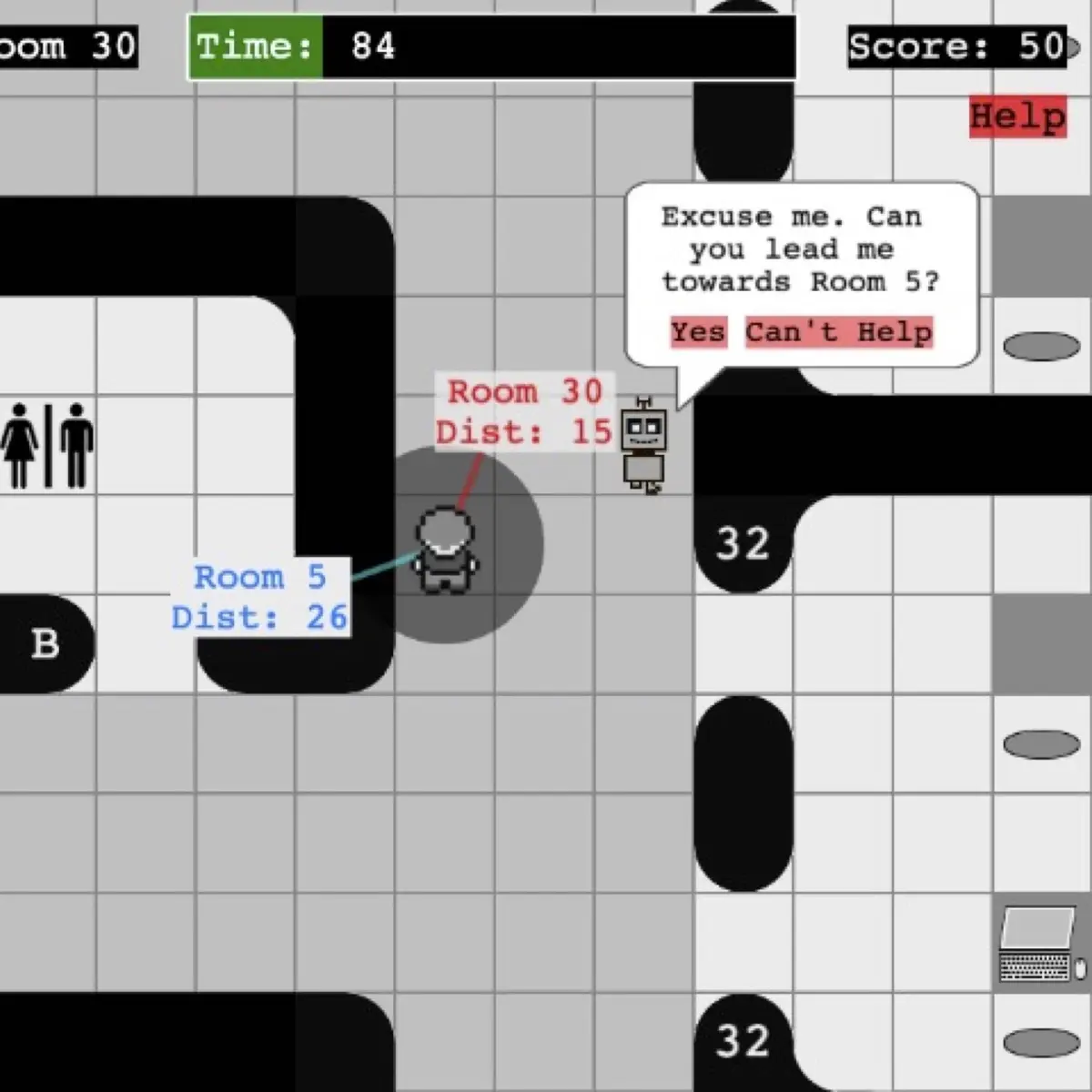
We develop a model of human helpfulness towards a robot that accounts for individual and contextual factors and integrate it in a BAMDP policy that empowers a robot to get more help in a localization task situated in a virtual office environment.

2020

CoRL '20

Multimodal trajectory prediction via topological invariance for navigation at uncontrolled intersections

Junha Roh, Christoforos Mavrogiannis, Rishabh Madan, Dieter Fox, Siddhartha Srinivasa

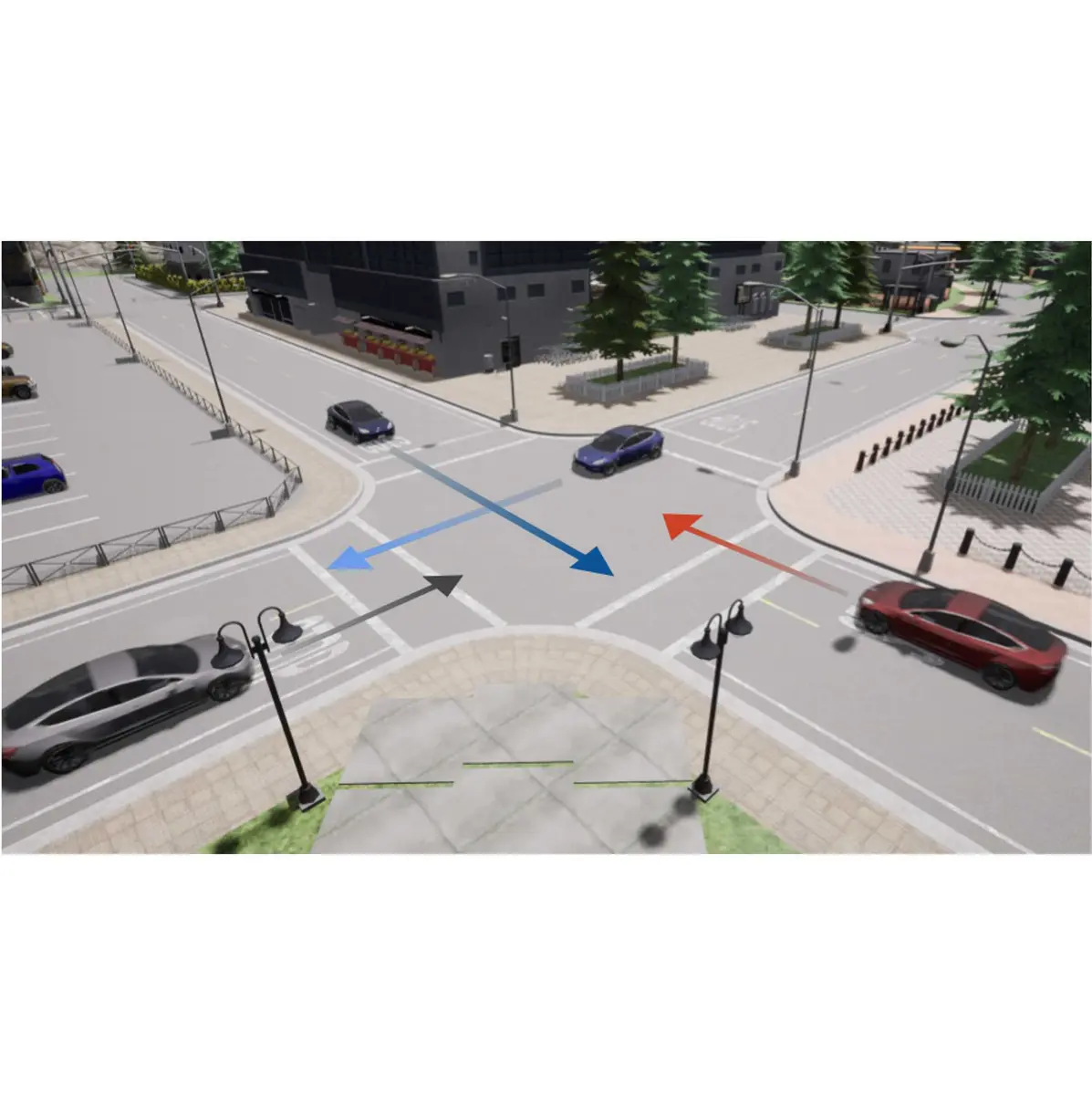
We abstract traffic at intersections into a set of modes using a notion of topological invariance, and construct a Graph Neural Network based model (MTP) that conditions multiagent trajectory prediction on the likelihood of modes given observation of past behavior. MTP empowers a MPC to safely traverse uncontrolled intersections across a variety of challenging intersection scenarios on the CARLA simulator.

IROS '20

Telemanipulation with chopsticks: Analyzing human factors in user demonstrations

Liyiming Ke, Ajinkya Kamat, Jingqiang Wang, Tapomayukh Bhattacharjee, Christoforos Mavrogiannis, Siddhartha S Srinivasa

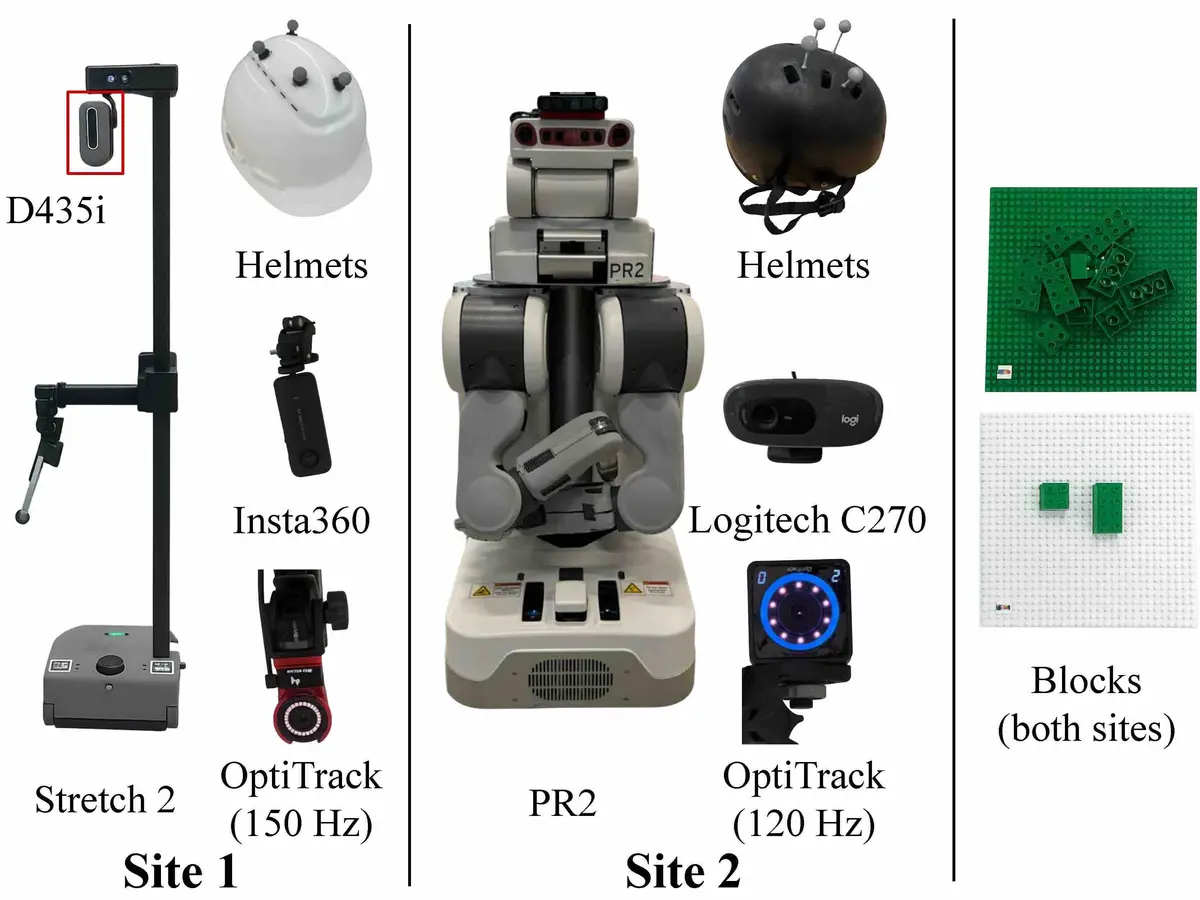
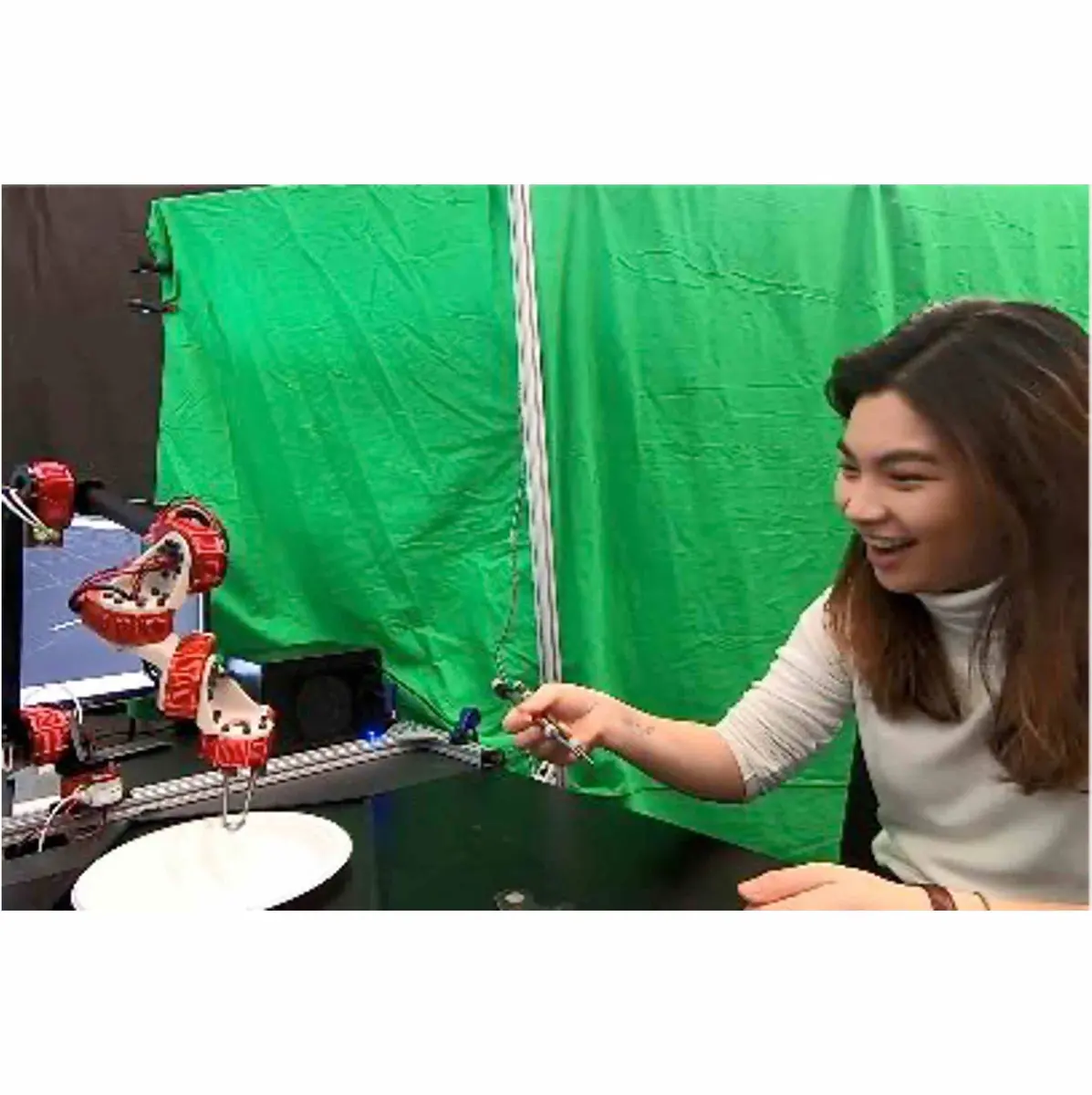
We developed a new system for chopsticks-based telemanipulation and conducted a user study (N=25) to gain insights into human manipulation strategies. We show that our system enables novice users to complete a series of challenging grasping tasks.

2019

arXiv '19

MuSHR: A low-cost, open-source robotic racecar for education and research

Siddhartha S Srinivasa, Patrick Lancaster, Johan Michalove, Matt Schmittle, Colin Summers, Matthew Rockett, Joshua R Smith, Sanjiban Choudhury, Christoforos Mavrogiannis, Fereshteh Sadeghi

We present MuSHR, the Multi-agent System for non-Holonomic Racing. MuSHR is a low-cost, open-source robotic racecar for education and research, aspiring to democratize robotics via documentation, tutorials, demos, and courses.

2017

IROS '17

Socially competent navigation planning by deep learning of multi-agent path topologies

Christoforos Mavrogiannis, Valts Blukis, Ross Knepper

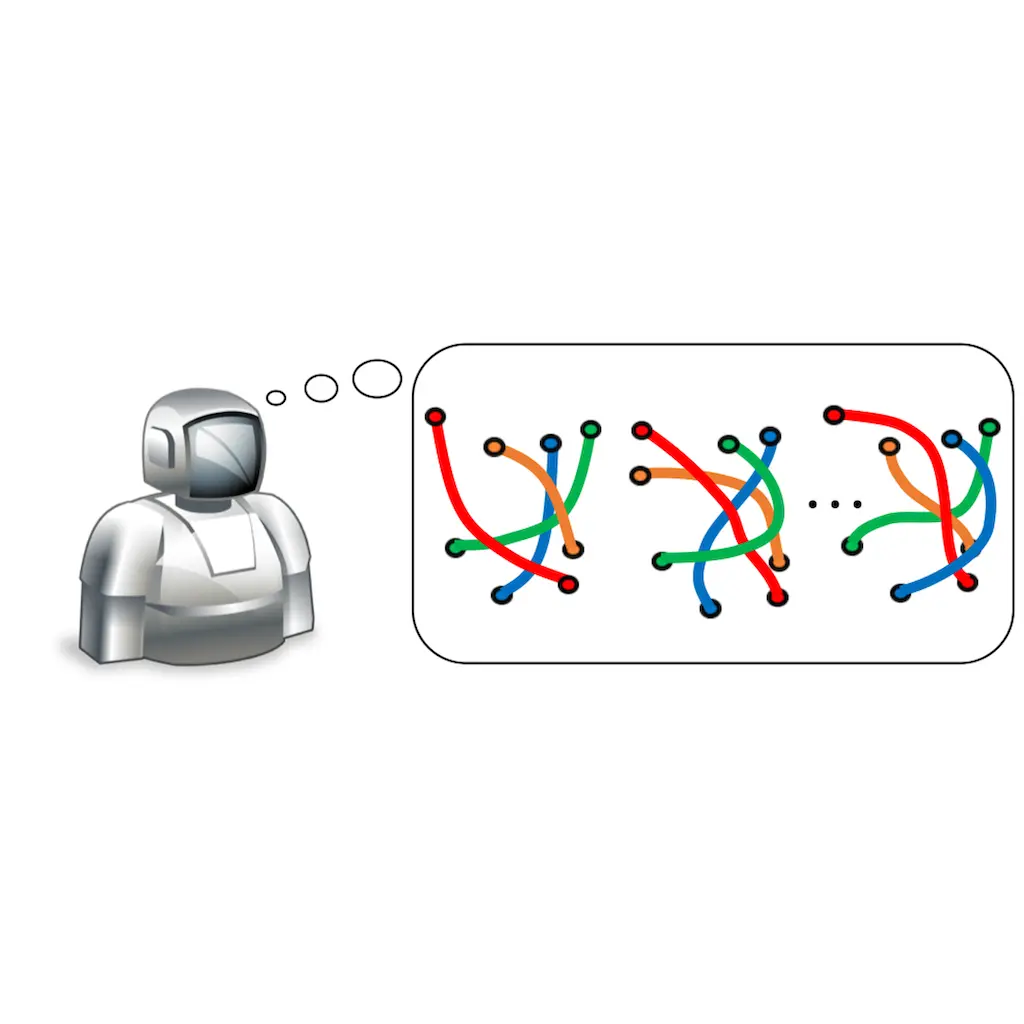
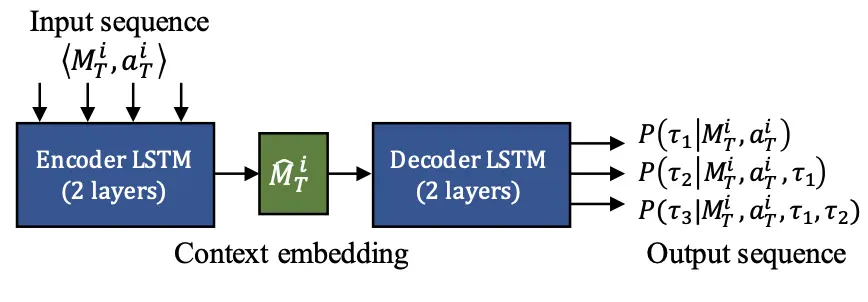
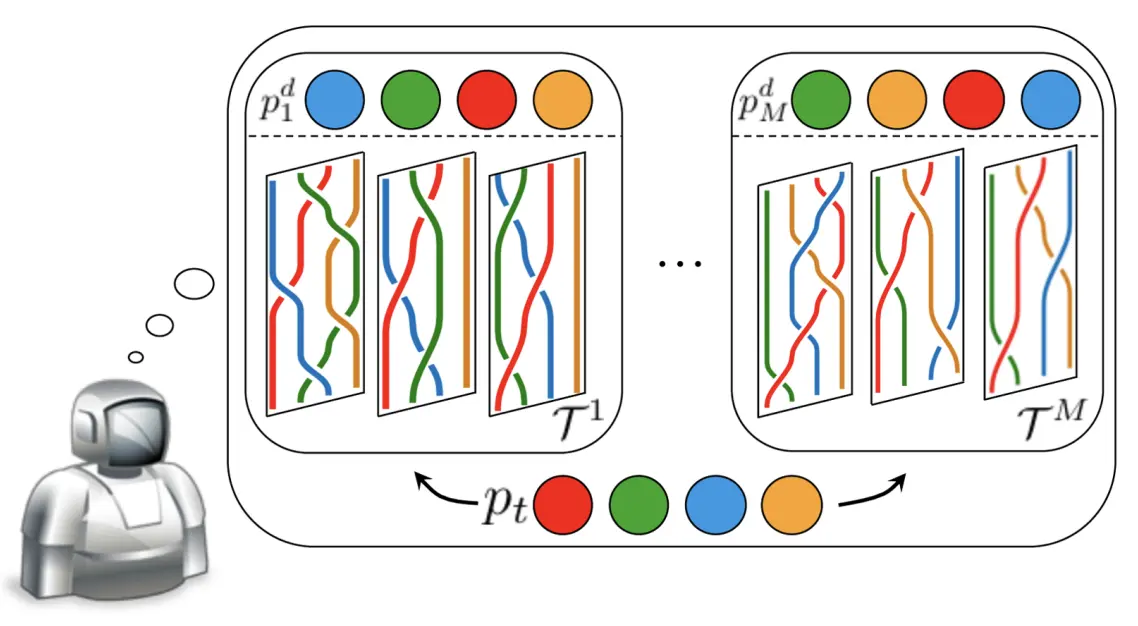
We use a LSTM-based architecture to learn a mapping from trajectories to a probability distribution over multiagent navigation strategies, encoded as topological braids. We show that this model enables non-communicating agents to coordinate efficiently across a series of challenging simulated scenarios.

HRI '17

Implicit communication in a joint action

Ross Knepper, Christoforos Mavrogiannis, Julia Proft, Claire Liang

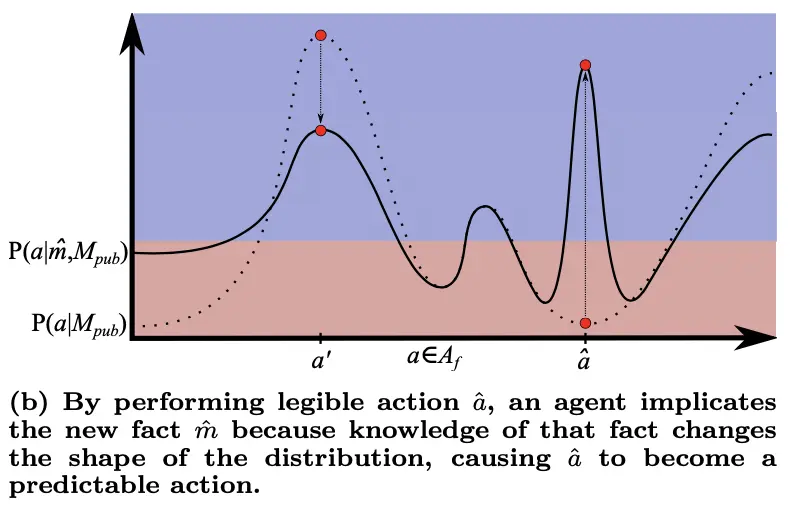
We formalize a general framework that enables robots to encode communicative signals on their actions to seamlessly convey information to their human partners on top of accomplishing the functional objectives of a task. We show how the framework maps onto various modalities, including natural language and motion.

2015

IROS '15

Open-source, anthropomorphic, underactuated robot hands with a selectively lockable differential mechanism: Towards affordable prostheses

George Kontoudis, Minas Liarokapis, Agisilaos Zisimatos, Christoforos Mavrogiannis, Kostas Kyriakopoulos

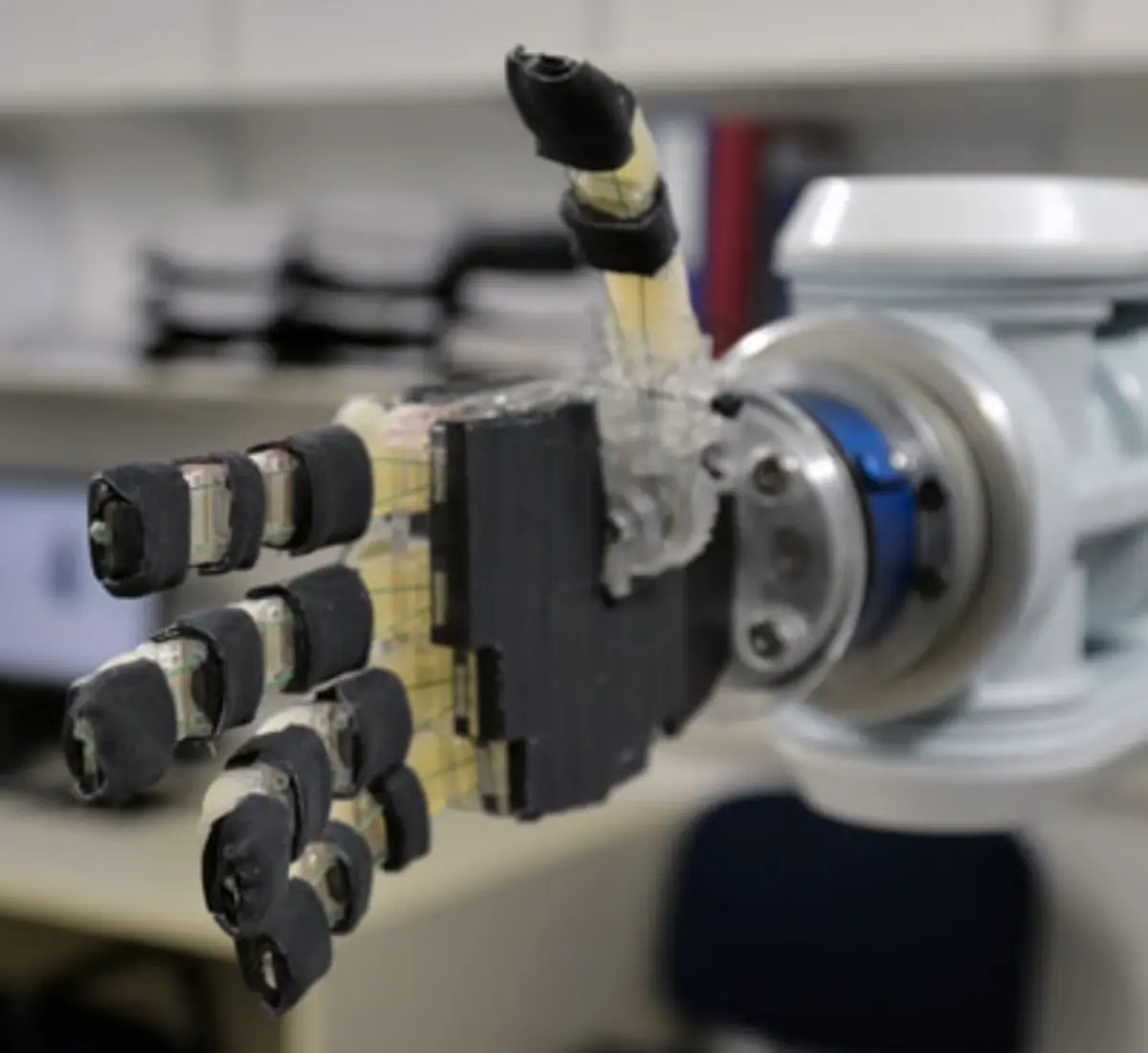
We present a new, open-source mechanical hand, designed according to human anthropometry studies to support the development of low-cost prosthetics. The hand can be assembled using off-the-shelf components and parts fabricated via standard prototyping techniques.

IROS '15

Quantifying anthropomorphism of robot arms

Christoforos Mavrogiannis, Minas Liarokapis, Kostas Kyriakopoulos

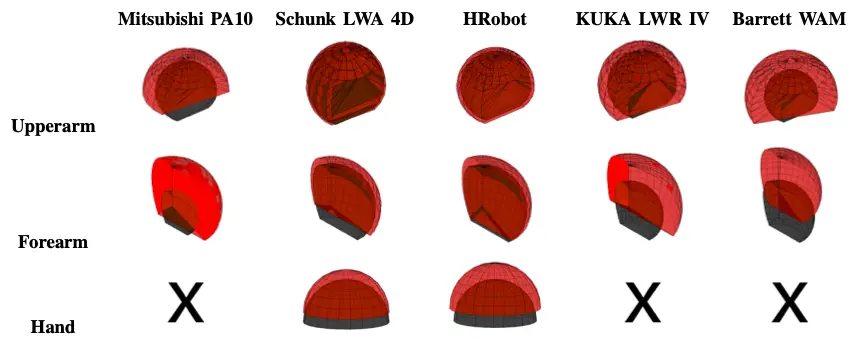
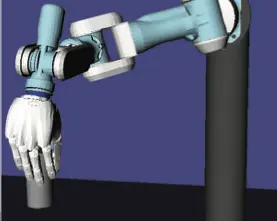
We introduce an index for assessing the anthropomorphism of a robot manipulator by comparing its workspace to the workspace of a human arm. A case study on commercial manipulators demonstrates the value of the approach.

2014

ICRA '14

Task-specific grasp selection for underactuated hands

Christoforos Mavrogiannis, Charalampos Bechlioulis, Minas Liarokapis, Kostas Kyriakopoulos

We propose an optimization-based approach for deriving task-specific, force-closure grasps for underactuated robot hands. We demonstrate the efficiency of the approach through simulations with the DLR/HIT II five-fingered robot hand.

IROS '14

Open-Source, Affordable, Modular, Light-Weight, Underactuated Robot Hands

Agisilaos Zisimatos, Minas Liarokapis, Christoforos Mavrogiannis, Kostas Kyriakopoulos

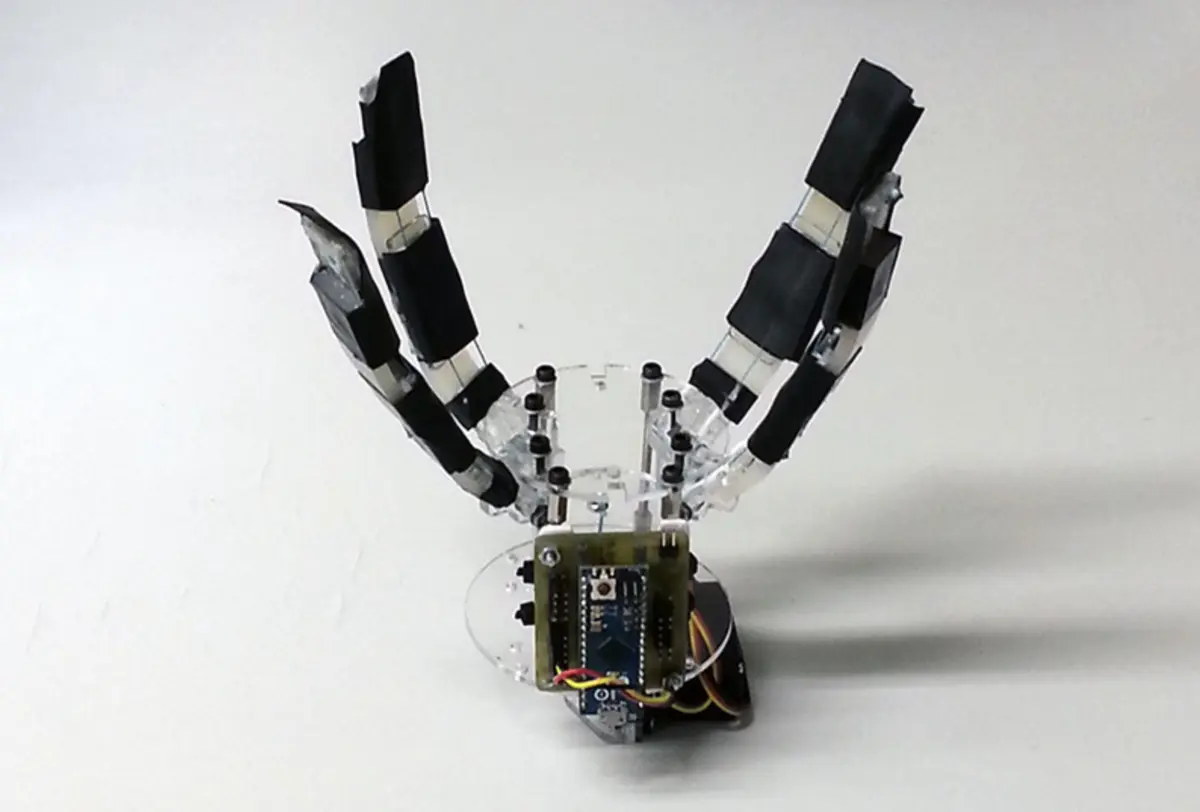
We present a new underactuated robot hand that can be built using off-the-shelf components, and easily fabricated parts. Real-world experiments demonstrate the promise of the design for grasping a wide range of everyday-life objects.

2013

ICRA '13

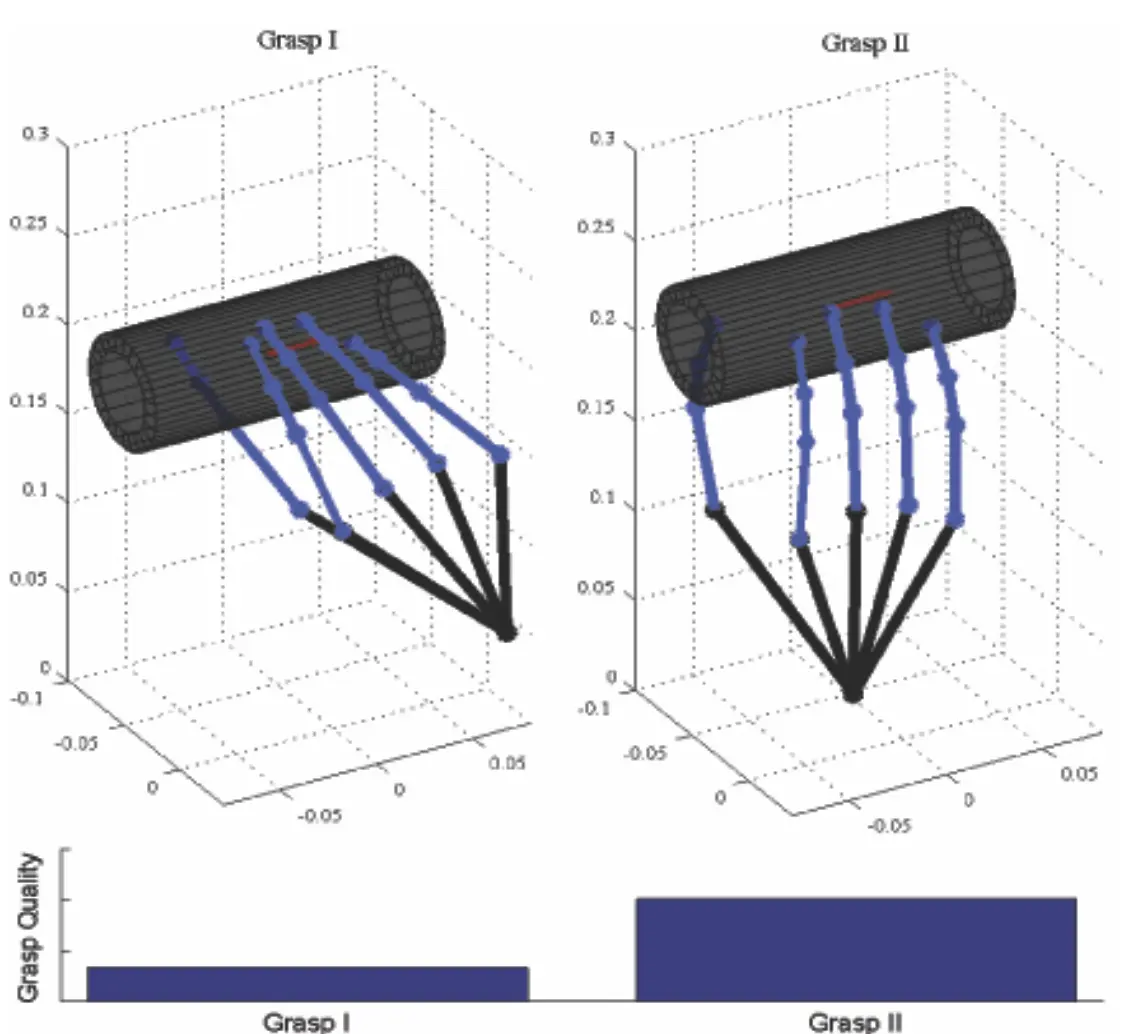
Sequential improvement of grasp based on sensitivity analysis

Christoforos Mavrogiannis, Charalampos Bechlioulis, Kostas Kyriakopoulos

We present an algorithm that takes as input a locally optimal robot grasp and outputs a grasp of higher quality by sequentially perturbing the hand posture and force exertion via sensitivity analysis. Simulations on the DLR/HIT Hand II demonstrate the value of the approach.